




























Fauna & Flora has unveiled the ‘Species to Watch 2026’ list, highlighting endangered species such as the European eel and the Cao Vit gibbon.
Conservationists warn that the world can no longer afford to keep postponing climate action. Only in this way can the natural wonders of our planet be protected and restored. Climate action
 ADVERTISEMENT
ADVERTISEMENT
ADVERTISEMENT
Today (7 January), the international conservation organisation Fauna & Flora unveiled its 'Species to Watch 2026' list. It draws attention to some 'strange and wonderful' species that could disappear in the foreseeable future.
Kristian Teleki, chief executive of Fauna & Flora, says the list offers insights into the 'core challenges' facing some of the world's most vulnerable species. These include habitat loss, deforestation, illegal wildlife trade and the climate crisis.
'It also shines a spotlight on the curious and magnificent plants and animals we protect — and the inspiring people and partners Fauna & Flora works with around the world to deliver effective conservation,' Teleki said. 'In difficult times, it is a sign of hope.' test
2030 is drawing nearer – a 'guiding star' for many nature and climate targets. These ten species enter the new year on the brink of extinction.
European eel
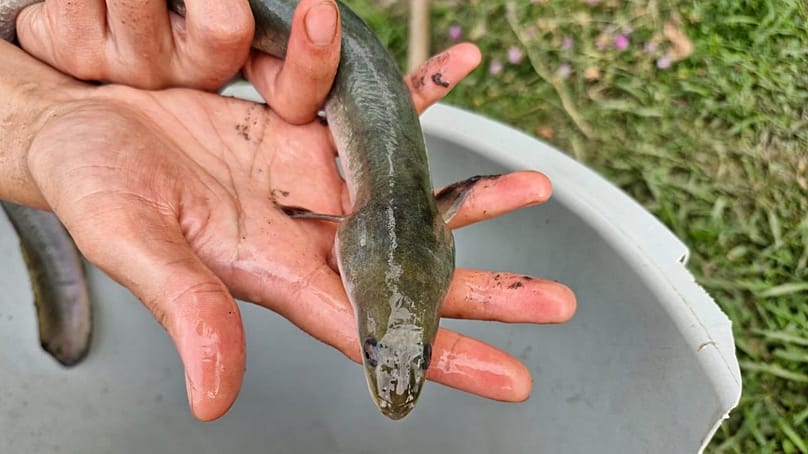
Once widespread across the continent, the European eel is edging ever closer to extinction. In the United Kingdom alone, numbers have plummeted by a dramatic 95 per cent over the past 25 years.
Experts blame overfishing — once fuelled by the popularity of jellied eels — as well as pollution, fragmented habitats and illegal trade.
They may not look cute. But experts warn that these snake-like creatures play a 'crucial role' in freshwater and coastal ecosystems. For otters, bitterns and other fish-eating species, they are a high-energy food source.
'Their disappearance would have serious consequences,' warns Fauna & Flora. 'We recently recorded the European eel during freshwater monitoring in Georgia, where it had not been detected for a long time. In 2026 we will continue to study this enigmatic, endangered fish species.'
Cao Vit gibbon
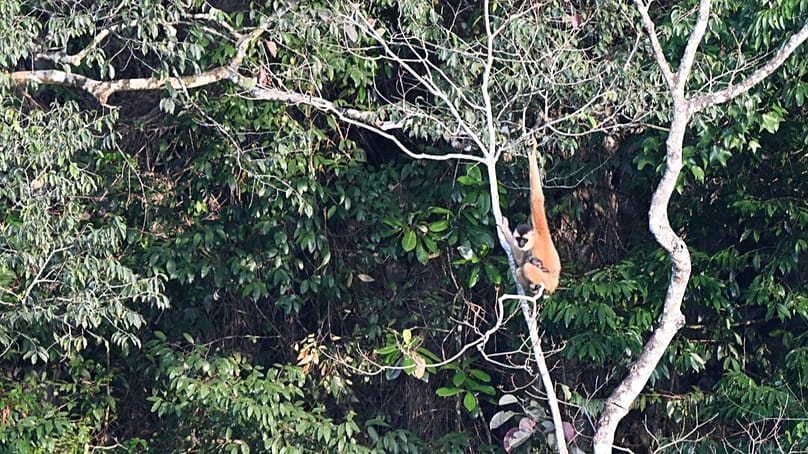
The Cao Vit gibbon owes its name to its distinctive call. It is considered the world's second-rarest primate. Researchers once thought it extinct until it was rediscovered in 2002.
Today only around 74 individuals remain. According to Fauna & Flora, the endangered species faces 'extreme danger from loss of genetic diversity, inbreeding and unpredictable catastrophes'.
A 2026 survey will reveal whether the organisation's conservation measures are restoring habitats and boosting the population.
Indian rainbow tarantula (Psychedelic Earth Tiger)
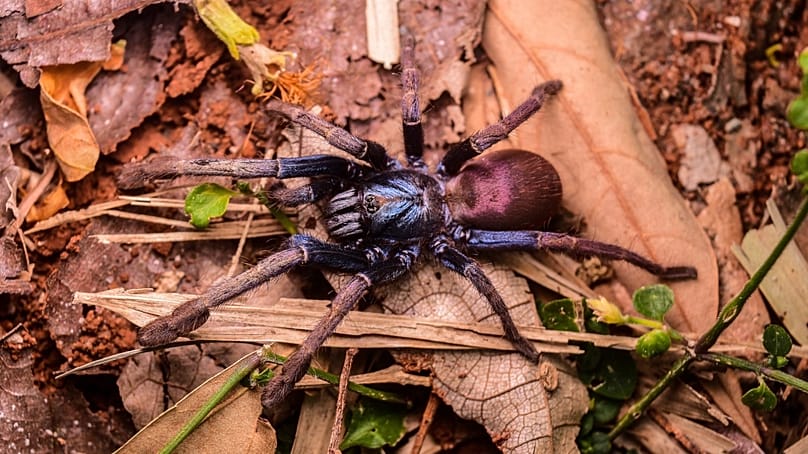
It is found only in the tropical forests of the southern Western Ghats in Kerala, India. This striking spider glows with many colours and has a metallic sheen.
Its looks, however, are its undoing. Demand in the illegal pet trade continues to pressure the population. Added to that are habitat loss and degradation. Both are pushing the Indian rainbow tarantula towards extinction.
The Conservation Leadership Programme (CLP) — a women-led team of spider specialists — is now working through field surveys, community projects and outreach to secure the species' future.
Blackchin guitarfish
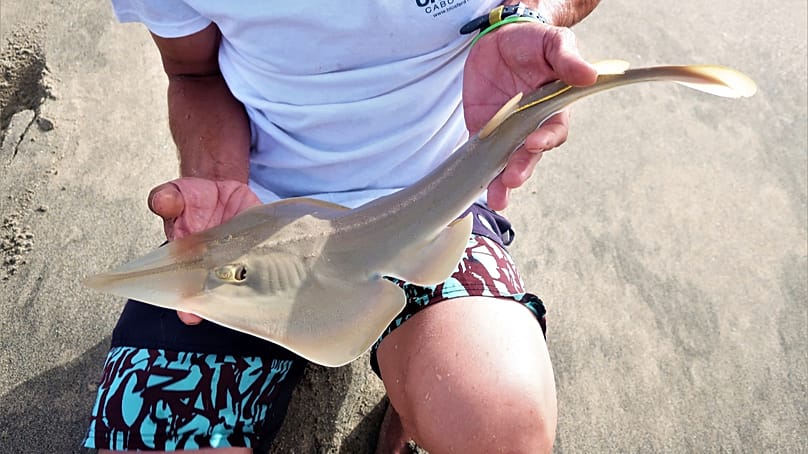
This 'strange and wonderful' guitarfish looks like a cross between a shark and a ray. It is characterised by a flattened snout, broad pectoral fins and a long tail with fins.
It is native to the Mediterranean and the eastern Atlantic. Overfishing, habitat destruction and slow reproduction have now left the blackchin guitarfish classified as endangered.
Fauna & Flora is currently working in the waters of Cabo Verde, aiming to halt the decline — by strengthening networks of marine protected areas and reducing shark and ray mortality from fishing.
Temminck's ground pangolin
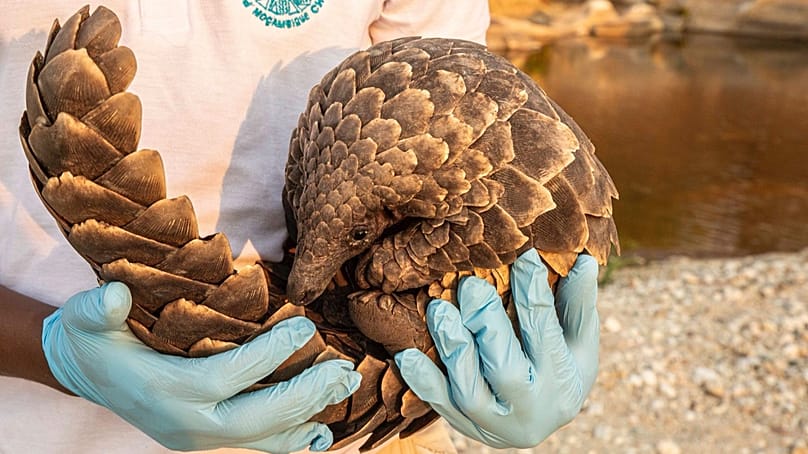
This ground-dwelling animal is the only one of Africa's four pangolin species that also occurs in the drier regions of East and southern Africa — with records as far as Chad and Sudan.
Temminck's ground pangolin forages 'very slowly and deliberately'. It often walks on its hind legs, using its short tail as a counterbalance. That is a sign of remarkable adaptation. Like all pangolins, however, the species suffers from the illegal trade in meat and scales.
Fauna & Flora is supporting the establishment of a crisis clinic in Mozambique. It helps care for and re-release rescued and injured pangolins.
Saker falcon

Lightning-fast and powerful: the saker falcon has been prized by falconers for millennia, especially in the Middle East.
Heavy demand has, however, sent numbers crashing. Researchers estimate that fewer than 30,000 remain in the wild.
This year, Fauna & Flora is assessing the impacts of trade in Central Asia. Teams are monitoring populations and gathering data on international supply chains. On that basis, protection strategies, community programmes and enforcement measures are being developed.
Clouded leopard
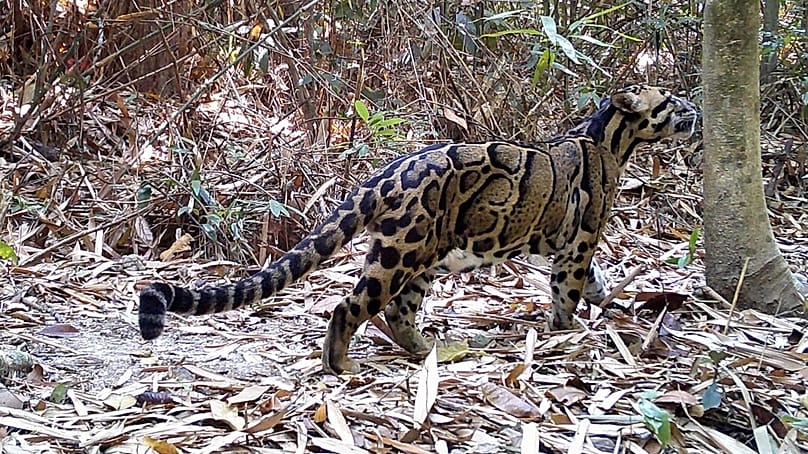
Because of its striking coat pattern, the clouded leopard is being pushed towards extinction by the illegal wildlife trade. Animals are smuggled alive, and pelts end up on the black market as decoration and luxury clothing.
Clouded leopards are likely hunted even for their teeth, claws and bones — parts that are passed off as tiger products.
This year, Fauna & Flora is supporting community-based patrols in Cambodia's Virachey National Park to protect the threatened cat.
Utila spiny-tailed iguana
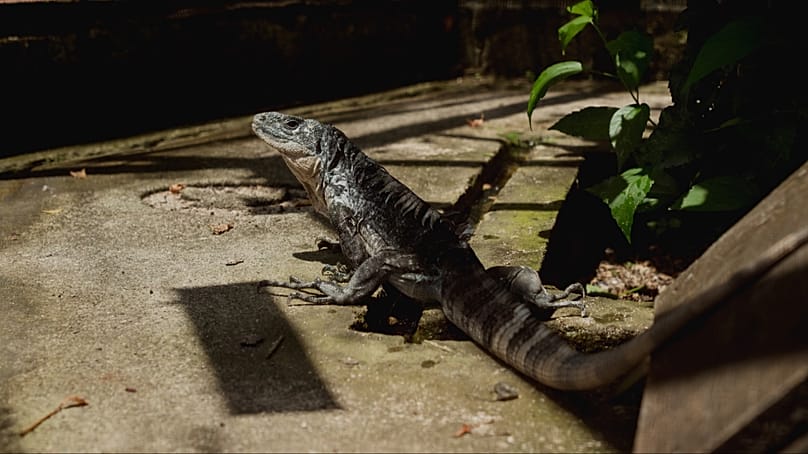
Named after the small island in Honduras and known locally as Wishiwilly del Suampo, the Utila spiny-tailed iguana lives exclusively in mangrove forests.
It is still considered endangered. However, a recent survey suggests its numbers have risen from around 3,000–6,000 to 7,000–14,000 individuals.
Fauna & Flora is helping partners in the country to further protect and restore the mangroves on which the iguanas depend.
Saint Lucia lancehead
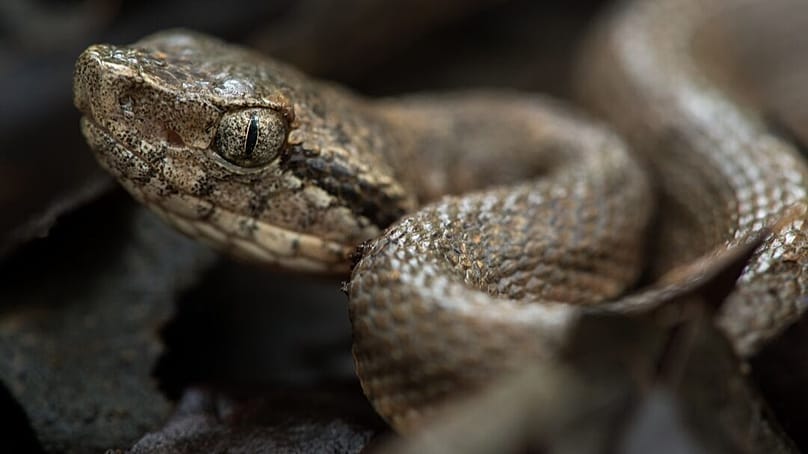
This highly venomous pit viper can deliver a bite that is fatal. It grows up to two metres long. As its name suggests, the threatened species is confined to the island of Saint Lucia in the Lesser Antilles.
It is widely feared, but it is not aggressive and bites only when it feels threatened. Nevertheless, many people in Saint Lucia kill the snake at first sight.
Fauna & Flora now wants to change the snake's image — away from 'public enemy number one' to a rare national treasure.
Wild tulips

It's not only animals that begin 2026 with shrinking populations. Tulips have been cultivated for centuries, but their wild ancestors originate in the mountains of Central Asia.
Kazakhstan, Kyrgyzstan, Uzbekistan and Tajikistan together harbour 63 unique tulip species. That is more than half of the world's diversity.
But overgrazing, overharvesting, urbanisation and climate change threaten the wild blooms. That is why Fauna & Flora is working with local communities to preserve traditions while protecting the flower's 'fragile' habitat.

